Quick answer
What matters most.
Age alone does not decide repair versus replacement. Start with a confirmed diagnosis, then consider repair history, component condition, refrigerant type, airflow, ductwork, comfort, efficiency, and how long you expect to keep the property. Ask for both paths when either is technically reasonable.
Homeowner guide
The full guide.
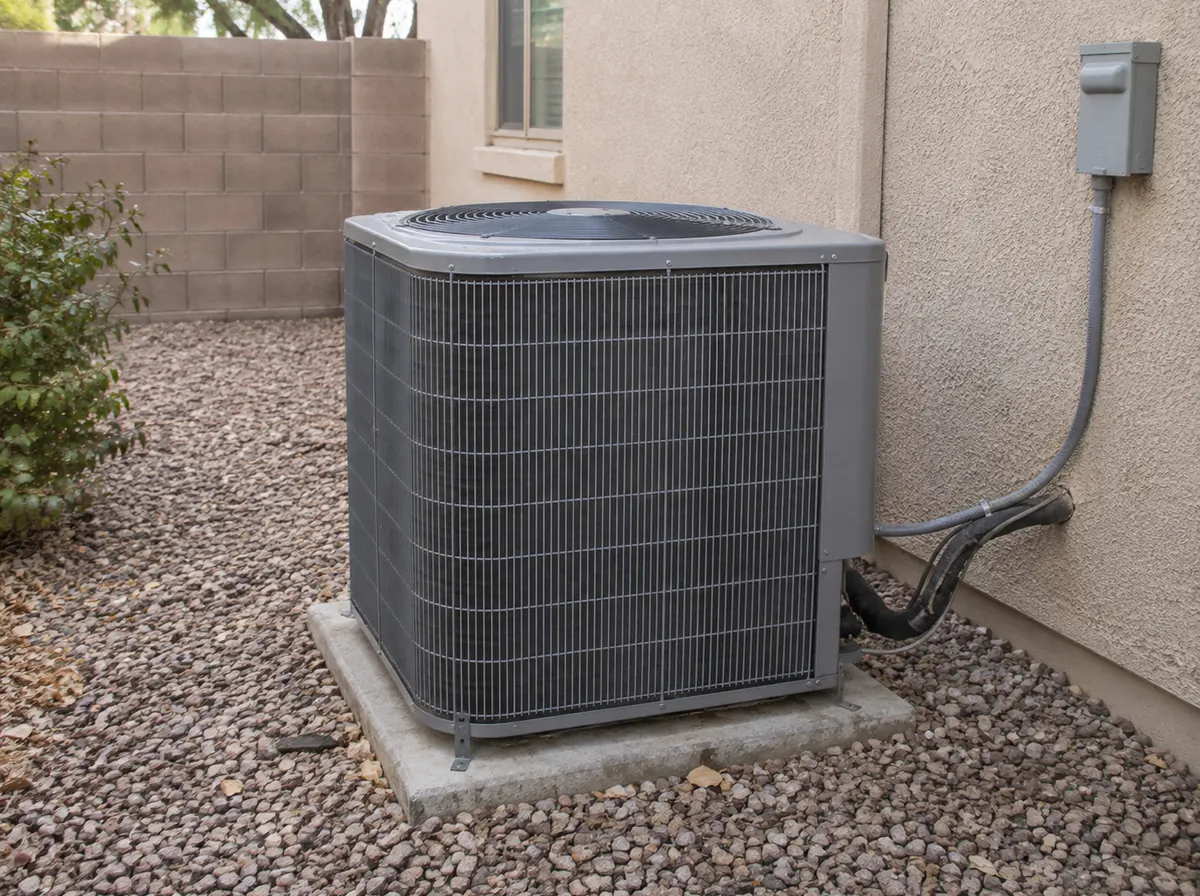
When your air conditioner starts acting up in the middle of a St. George summer - temperatures regularly hitting 110°F or higher - the last thing you want to do is make a rushed, costly decision. Do you call for AC repair? Or is it time to replace the whole system? Getting this choice wrong can mean throwing thousands of dollars at a unit that's on its last legs, or unnecessarily scrapping equipment that has years of life left.
This guide breaks down the key factors St. George homeowners should weigh when facing this decision, so you can choose with confidence.
The 10-Year Rule: Start Here
Age is one starting point, not a replacement rule. Compare the diagnosed fault, repair scope, service history, parts availability, warranty, efficiency, and comfort before deciding whether repair or replacement fits.
An older system with a major failure may justify comparing replacement, while a sound system with an isolated repair may still be useful. Ask for both reasonable options where applicable.
SEER2 Efficiency: What You're Leaving on the Table
Older AC systems were built to efficiency standards that simply don't hold up to today's benchmarks. Modern air conditioners are rated using the SEER2 (Seasonal Energy Efficiency Ratio) scale, and newer units typically achieve ratings of 15 to 20 SEER2 or higher. An older system from 10 to 15 years ago may be operating at the equivalent of 10 to 12 SEER.
The potential savings depend on the existing equipment, new matched system, installation, weather, utility rates, and household usage. Ask for the assumptions behind any savings or payback estimate.
Warning Signs Your AC Is Failing
Some symptoms are minor and repairable. Others are red flags that suggest the system is approaching end of life. Here's how to tell the difference:
Signs That Usually Warrant Repair
- Capacitor or contactor failure - These are relatively inexpensive components that wear out over time. Replacement costs are modest and well worth it on a younger system.
- Refrigerant leak on a newer system - If the unit is under 8 years old and this is the first refrigerant issue, a repair and recharge often makes sense.
- Dirty coils or clogged drain line - Maintenance issues, not structural failures. Clean and repair.
- Thermostat malfunction - The thermostat, not the AC unit itself, is often the culprit when a system isn't cooling properly.
Signs That Lean Toward Replacement
- Compressor failure - The compressor is the heart of the system. Replacing it on an older unit rarely makes financial sense, as other components are likely to fail soon after.
- Frequent breakdowns - If you've called for AC repair in St. George two or more times in a single season, the system is telling you something.
- R-22 refrigerant system - New production and import ended in 2020, but existing equipment can still be serviced with available recovered or previously produced refrigerant. Compare the actual repair and supply situation; R-22 alone does not require replacement.
- Uneven cooling throughout the home - When rooms that used to cool evenly now have significant hot spots, it often indicates the system can no longer distribute conditioned air effectively.
- System running constantly but not reaching setpoint - In St. George's desert heat, an AC that runs all day and never fully cools the house is working too hard for its capacity - a sign the unit is failing or was undersized.
The Southern Utah Climate Factor
St. George's heat is not like Phoenix's dry heat or Las Vegas's urban heat island - it's a combination of extreme temperatures, dry air, and fine desert dust that puts unique stress on HVAC systems. Dust and particulate buildup accelerate wear on fan motors, coils, and filters. UV exposure degrades exposed components faster than in milder climates.
Local heat makes reliable cooling important, but age alone does not establish the equipment's remaining life. An assessment before peak summer gives you time to compare documented repair and replacement options.
What a New AC System Costs vs. What It Saves
- Potential lower energy use, evaluated for the specific equipment and home
- New manufacturer warranty (typically 5 to 10 years on parts, sometimes longer)
- New equipment condition and its maintenance requirements
- Improved comfort and humidity control
- Potential utility rebates for high-efficiency equipment
Include expected time in the home, warranty terms, ongoing maintenance, utility rates, and the value of reliable comfort in the comparison. Ask which incentives currently apply before including them in the budget.
Get a Professional Assessment Before You Decide
The most important thing you can do before spending money on either repair or replacement is get an honest evaluation from a qualified HVAC technician. A thorough assessment should include a review of the system's age and service history, an efficiency test, an inspection of the compressor, coils, refrigerant levels, and electrical components - and a straightforward recommendation based on your specific situation.
Be cautious of anyone who pushes replacement on a system that doesn't need it, or who offers a band-aid repair on a unit that's past its useful life. The right answer depends entirely on the specifics of your system.
Schedule Your AC Assessment With West Desert Plumbing, Heating & Air
At West Desert Plumbing, Heating & Air, we've been helping St. George homeowners make smart HVAC decisions for years. Our technicians will give you a straight answer - repair or replace - based on what's actually right for your home and your budget. We service all makes and models, and we offer AC repair in St. George as well as full AC installation and replacement when the time is right.
Don't wait until midsummer to find out your system can't handle another season. Call us today or schedule online - we're here to keep your home cool all year long.
Before a service visit
Four details that improve the diagnosis.
- Confirmed failed component and root cause
- Repair history and overall equipment condition
- Airflow, duct, electrical, and refrigerant constraints
- Comfort goals and expected time in the home
Sources and review
Authoritative references.
This resource was updated on . The references below support the safety and maintenance framework used on this page.