Quick answer
What matters most.
Loss of heat, short cycling, abnormal noise, repeated ignition trouble, and unusual odors deserve diagnosis. Verify thermostat settings and a clean filter, but stop operating fuel-burning equipment if a carbon monoxide alarm sounds or you suspect combustion or venting trouble.
Questions and answers
Frequently asked questions.
What can I check safely when the furnace will not start?
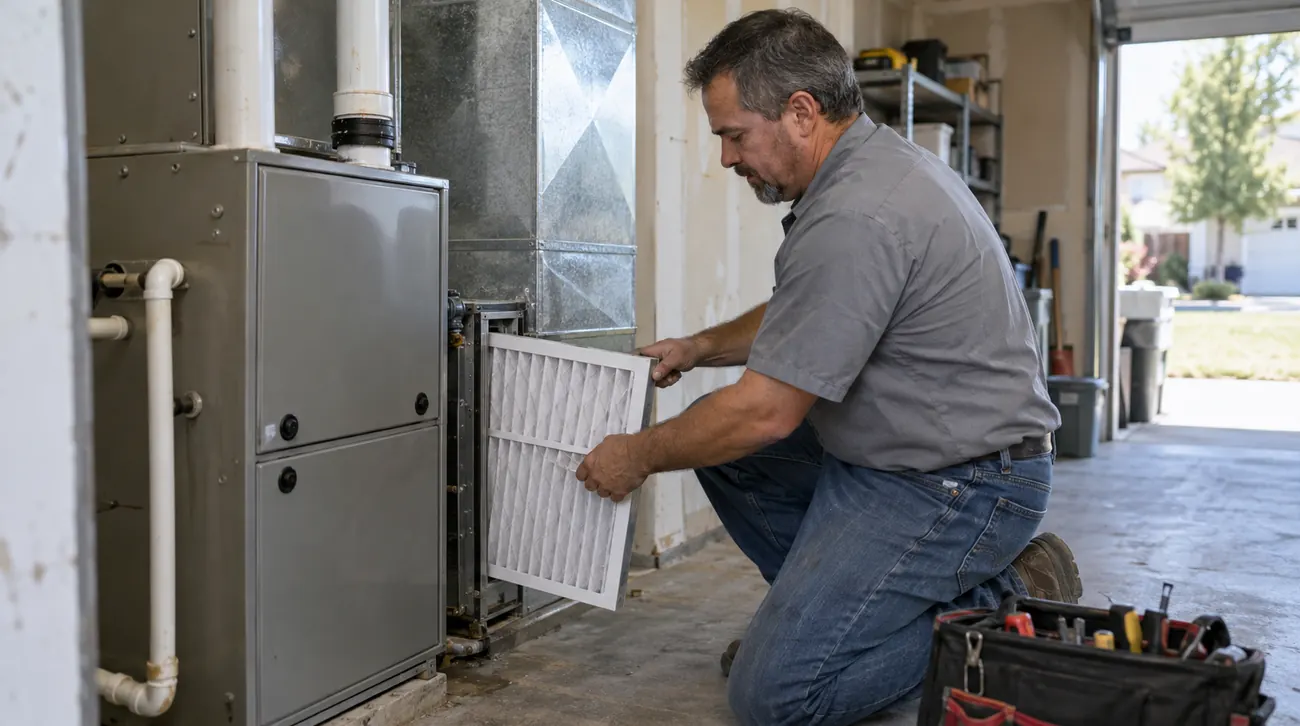
Confirm the thermostat is in heating mode and set above the displayed room temperature. Check an accessible filter and clear blocked return grilles. Record visible error information without removing the cabinet, changing wiring, or bypassing a safety control.
Why does the furnace start and stop repeatedly?
Short cycles can involve airflow, controls, ignition, or a safety shutdown. Note whether the blower starts and how long the cycle lasts. That sequence helps a technician choose tests; it does not confirm a particular failed part.
What should I do if a carbon monoxide alarm sounds?
Move everyone outside to fresh air, call 911, and stay out until emergency responders say reentry is safe. Do not search for the source or restart the furnace. The appliance needs professional inspection before it is used again.
Can furnace maintenance take the place of a repair visit?
A tune-up is intended to inspect and maintain operation. Report an existing no-heat condition, repeated shutdown, or unusual odor when booking so diagnosis is included in the discussion. Any repair scope depends on what the technician finds.
Does a heating problem always mean the furnace needs replacement?
No. An isolated serviceable component can support a repair, while repeated failures or a confirmed safety concern may change the options. Ask for the diagnosis and condition of the connected system before comparing repair with replacement.
Is a heat-pump heating problem diagnosed the same way?
A heat pump uses different equipment and controls from a fuel-burning furnace. Share the system type, selected mode, outdoor conditions, and any auxiliary-heat message. The technician should evaluate the equipment actually installed at the home.
Decision guide
Begin with the furnace startup sequence.
The order in which a furnace starts can reveal whether the problem is related to the thermostat call, ignition, flame confirmation, blower, airflow, or a safety control. Observe only from outside the cabinet. Error codes and sounds are useful, but they should not be used to bypass a lockout or safety device.
No response
Confirm the thermostat is calling for heat and note whether the control, inducer, ignition, or blower responds at all.
Starts and stops
Record which stage is reached before shutdown and whether the pattern repeats. That timing helps focus the diagnostic sequence.
Runs with poor comfort
Compare filter condition, supply airflow, return-air access, and the rooms that stay cold while the equipment continues running.
Southern Utah context
How this applies locally.
Southern Utah winters are milder than many regions, but overnight cold still makes reliable heat important. Testing the system before the first cold period can reveal startup problems while scheduling is more flexible.
Before a service visit
Four details that improve the diagnosis.
- Thermostat mode and power
- Filter and return-air condition
- Ignition behavior and visible error code
- Odor, alarm, soot, or venting concern
Professional standard
How a furnace failure is traced through the sequence.
A furnace does not produce heat in one step. The thermostat request, controls, ignition, heat production, blower, airflow, and safety responses must occur in order. The technician looks for the point where that sequence changes.
- Evidence
- Ask which observation, measurement, or test confirms the cause.
- Options
- Review reasonable repair, monitoring, or replacement paths when more than one is technically sound.
- Next step
- Confirm the approved scope, system access, and any follow-up maintenance before work begins.
Sources and review
Authoritative references.
This resource was updated on . The references below support the safety and maintenance framework used on this page.
- Carbon monoxide safety fact sheet (opens in a new tab)U.S. Consumer Product Safety Commission
- Heating and cooling maintenance checklist (opens in a new tab)ENERGY STAR