Quick answer
What matters most.
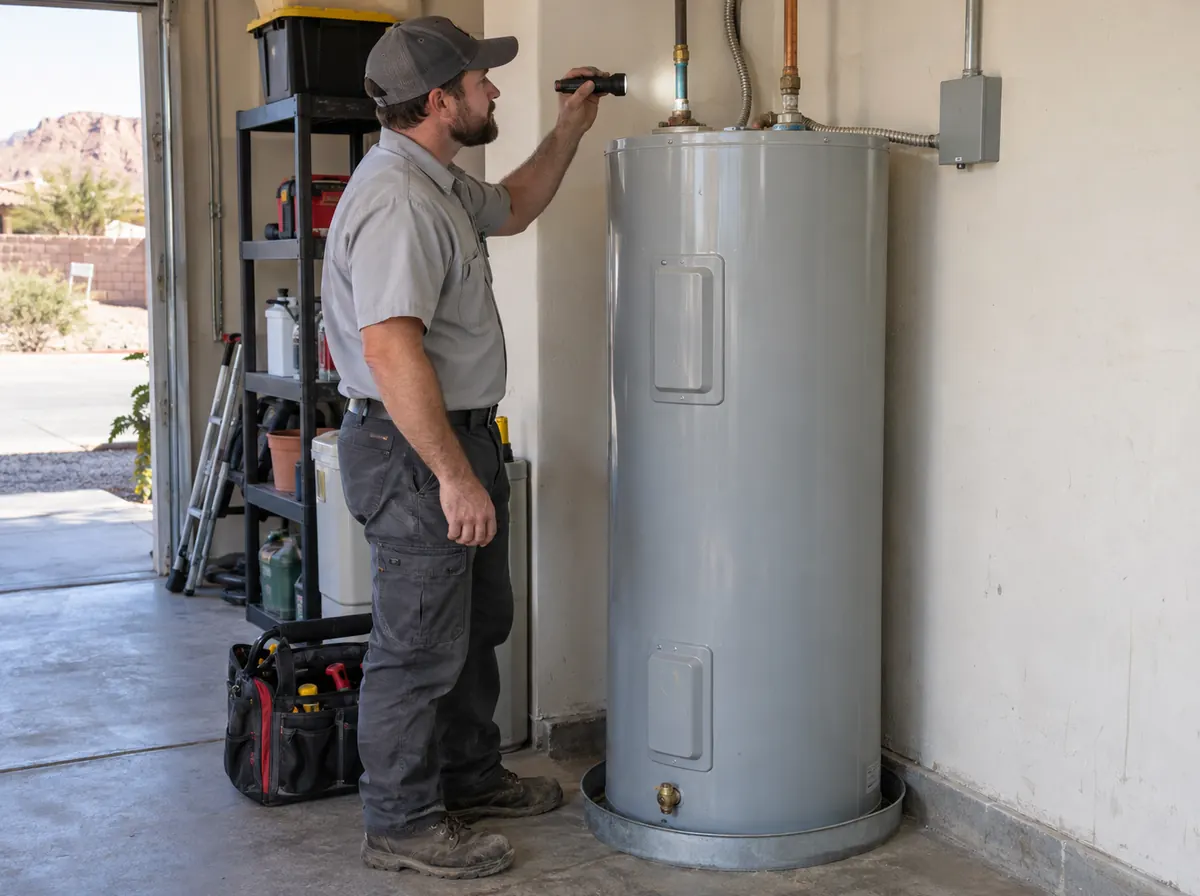
No hot water can start with power, gas supply, controls, ignition, heating elements, flow sensing, scale, or a failed component. Verify only safe external controls and the home's power or fuel status. Stop if there is leaking, gas odor, scorching, or repeated breaker activity.
Decision guide
Separate tank and tankless symptoms first.
The two equipment types respond differently to a hot-water call. A tank stores heated water and cycles to recover it. A tankless unit must detect flow and then start its heating sequence. Tell the technician which type is installed, what the display shows, and whether every fixture has the same problem.
No hot water anywhere
Report power or gas status, visible controls, error information, unusual sound, and whether the equipment attempts to start.
Temperature changes during use
Note which fixtures are running, whether flow changes, and whether the symptom occurs at one faucet or throughout the home.
Water near the unit
Stop using equipment when leakage is active or reaches electrical or combustion components, then report where the moisture first appears.
Southern Utah context
How this applies locally.
Hard-water scale is a relevant maintenance factor in St. George, but it is not the only cause of a hot-water problem. A technician should distinguish scale from electrical, combustion, control, flow, and plumbing issues.
Before a service visit
Four details that improve the diagnosis.
- Tank or tankless equipment type
- Whole-home issue or one fixture
- Power, fuel, control display, and error code
- Leak, odor, noise, or recent service
Professional standard
What a complete hot-water diagnosis considers.
Hot-water symptoms can originate at the energy source, controls, tank or heat exchanger, water connections, venting, or household demand. The technician compares the complaint with how the unit starts, heats, stores, and delivers water.
- Evidence
- Ask which observation, measurement, or test confirms the cause.
- Options
- Review reasonable repair, monitoring, or replacement paths when more than one is technically sound.
- Next step
- Confirm the approved scope, system access, and any follow-up maintenance before work begins.
Sources and review
Authoritative references.
This resource was updated on . The references below support the safety and maintenance framework used on this page.
- Water heating guidance (opens in a new tab)U.S. Department of Energy
- St. George drinking water quality report (opens in a new tab)City of St. George