
Quick answer
What matters most.
A tank system favors familiar operation and stored capacity. A tankless system favors compact, on-demand operation but requires correct fuel, venting, flow, and water-quality planning. The right choice depends on the home's existing connections, simultaneous hot-water demand, available space, and maintenance expectations.
Homeowner guide
The full guide.
If your water heater is getting close to the end of its life - or it's already dead and you're shopping for a replacement - you've got a decision to make that matters more in St. George than almost anywhere else in the country: tank or tankless?
The answer isn't the same for every household. Southern Utah's hard water, high summer hot water demand, and long heating seasons all factor in. This guide breaks down both options honestly so you can make the right call for your home and budget.
How Each System Works
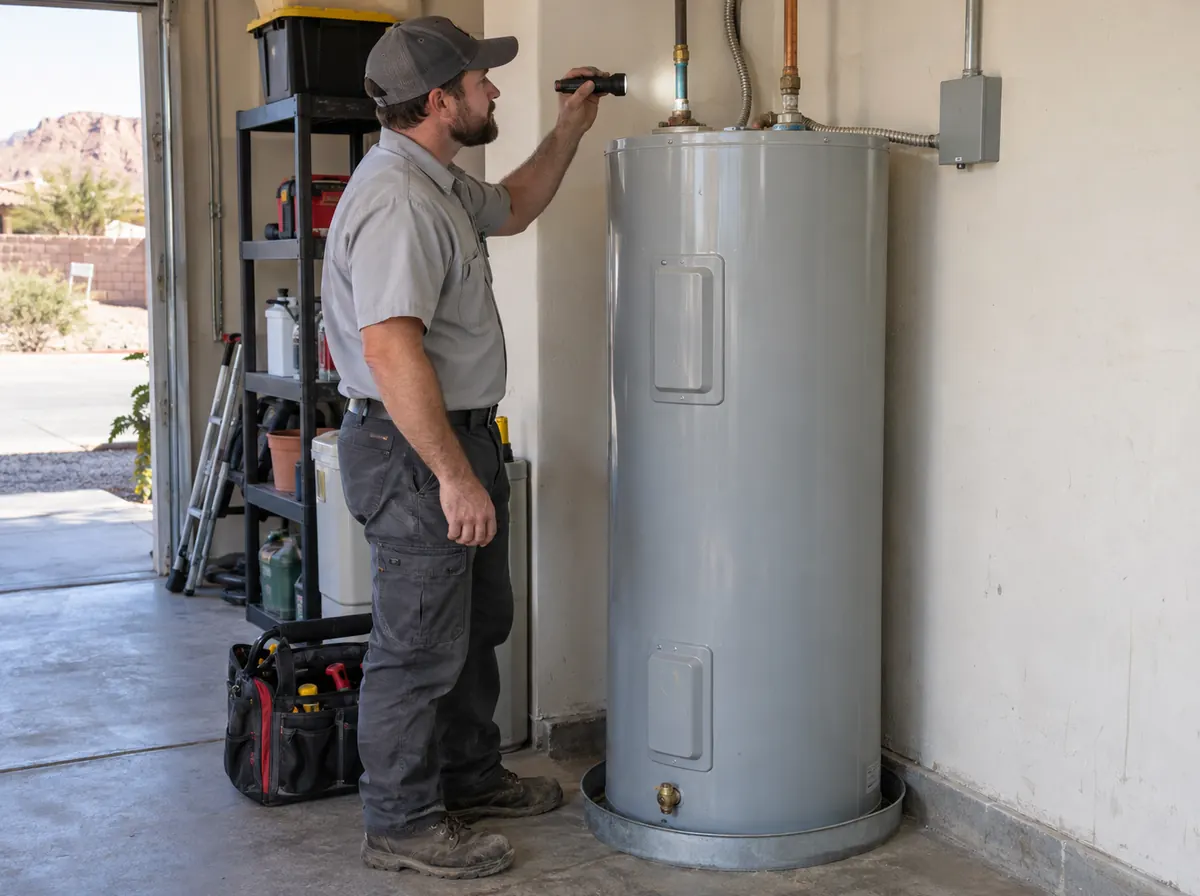
Traditional tank water heaters store a set amount of hot water - typically 40 to 80 gallons - and keep it heated continuously. When you turn on the shower, you're drawing from that stored supply. When the tank empties, you wait for it to recover. It's simple, it's been around for decades, and every plumber in St. George knows how to work on one.
Tankless water heaters (also called on-demand or instantaneous heaters) don't store hot water at all. When you open a hot tap, cold water flows through a heat exchanger - powered by gas or electricity - and comes out hot almost immediately. There's no tank to run out of, and the unit only uses energy when you're actually using hot water.
Tank and tankless systems are available with different fuel and electrical requirements. Confirm the home's existing fuel, electrical capacity, venting, and the proposed unit's installation requirements before comparing options.
Cost Comparison for Southern Utah
This is where most people start, and the numbers are worth understanding in detail:
Traditional tank water heater:
- Lifespan: 8 to 12 years (shorter with hard water)
Tankless water heater:
- Lifespan: 15 to 25 years with proper maintenance
Scale control matters for either type of heater. Follow the specific manufacturer's water-quality limits, inspection and descaling instructions, and warranty conditions. A water test helps set the maintenance plan.
Best Option for St. George Homes
Here's how we'd break it down by situation:
Tank is usually the better call if:
- You need a fast, low-cost replacement - maybe a unit failed and you need hot water today
- You're on a strict budget and can't absorb the higher upfront cost
- You're planning to sell the home in the next 3 to 4 years and won't recoup the investment
- You have an older home with 1/2-inch gas lines that would need upgrading for a tankless unit
- Your household's hot water demand is genuinely low (one or two people)
Tankless is usually the better call if:
- You have a larger family that regularly runs out of hot water during peak usage
- You want the long-term efficiency savings and have time to earn back the upfront cost
- You're building or renovating and can spec in the right gas line and venting from the start
- You already have a whole-home water softener (or are willing to install one)
- You want to free up utility closet or garage space - tankless units are wall-mounted and compact
Multiple bathrooms make peak flow important. A tankless heater can provide continuing hot water only within its rated capacity at the required temperature rise. Compare simultaneous fixture use with that capacity before choosing equipment.
Our Recommendation
Ask for a recommendation based on the home's peak hot-water demand, available connections, equipment condition, and maintenance needs. A tankless option should include any fuel, electrical, venting, or water-treatment work required for the proposed model.
Review the specific model, warranty, service access, and parts support included in the quote. Confirm which equipment West Desert currently offers before selecting a brand.
Whatever direction you go, we'll give you a transparent quote with all costs laid out - unit, installation, any necessary upgrades - before any work begins. No surprises.
FAQ
Q: How long does water heater installation take in St. George?
A: The timeline depends on the existing connections and approved scope. A conversion may require additional fuel, electrical, venting, or drainage work. Ask for an installation window and hot-water interruption plan when the work is quoted.
Q: Will a tankless water heater work with St. George's hard water?
A: Suitability depends on the model's water-quality limits and maintenance requirements. Test the incoming water and follow the manufacturer's scale-control instructions. Confirm any maintenance service scope when arranging the work.
Q: My water heater is 10 years old but still working - should I replace it now or wait?
A: With St. George's hard water, a 10-year-old tank unit is likely in the last few years of its life even if it seems fine. The risk of waiting is that it fails abruptly - often with a leak or flood - and you're forced into an emergency replacement at the least convenient time. A planned replacement gives you time to choose the right unit at a non-emergency service scope. It's worth having us do a quick inspection to assess the current state.
Q: Are incentives available for water heater replacement?
A: Confirm current program rules and the exact qualifying model before including an incentive in your budget. Ask the program administrator about eligibility, dates, and required documentation.
Not sure which system fits your home? Ask West Desert Plumbing, Heating & Air about the existing setup, hot-water demand, connection requirements, and available options. Request a consultation and confirm its scope and any charge.
Before a service visit
Four details that improve the diagnosis.
- Available gas or electrical capacity
- Number of fixtures used at the same time
- Venting, drain, and wall-clearance requirements
- Scale-control and maintenance plan
Sources and review
Authoritative references.
This resource was updated on . The references below support the safety and maintenance framework used on this page.
- Tankless water heater fundamentals (opens in a new tab)U.S. Department of Energy Building Science Education
- Water heating guidance (opens in a new tab)U.S. Department of Energy
- St. George drinking water quality report (opens in a new tab)City of St. George