Quick answer
What matters most.
A burning smell on the first heating cycle is often dust burning off the heat exchanger and should fade within a few cycles. Gas, plastic, chemical, or persistent smells mean shut the system off and get help.
Homeowner guide
The full guide.
The first cool morning arrives, you bump the thermostat over to heat, and within a minute the house smells like something is scorching. A furnace burning smell on the first run of the season is a common autumn complaint in St. George, and often the system is doing exactly what it should.
Here is the mechanism. Your furnace sat idle all summer while the blower circulated air for cooling. Dust settled on the heat exchanger, the burner assembly, and the surrounding metal. When the burners light for the first time, those surfaces climb to several hundred degrees, and the organic dust on them chars and burns off. What you smell is that dust, not the furnace.
The useful question is not whether a furnace burning smell is happening. It is which smell you have.
Why Dust Burn-Off Smells So Strong Here
Southern Utah homes take in a remarkable amount of fine dust. It rides in on monsoon winds, blows off construction sites, and settles through returns and registers all summer long.
That dust lands on the hottest metal in your house. The heat exchanger is the sealed metal chamber that separates burner flames from the air you breathe, and its surface is the first thing to reach ignition temperature for settled debris.
A normal dust burn-off has a specific signature:
- It starts within a minute or two of the first heating cycle of the season.
- It smells like hot dust or singed lint, not like plastic, rubber, or gas.
- It fades noticeably as the cycle runs and is usually gone within a few cycles.
- No alarm sounds and no smoke is visible.
Opening a window for a few minutes helps clear it. If the smell fits that description and fades, no repair is needed.
When a Furnace Burning Smell Is Not Normal
These smells mean something different, and a couple of them mean stop what you are doing:
- Rotten eggs or sulfur: Natural gas is odorless on its own, so utilities add a sulfur compound so leaks are detectable. Leave the house, do not flip switches, and call your gas utility from outside.
- Burning plastic or hot electrical smell: This usually points to overheating blower motor windings, a failing capacitor, or chafed wiring in the control area. Shut the system off at the thermostat and call for service.
- Acrid, chemical, or metallic smell with soot marks: Combustion is not happening cleanly, which can mean a cracked heat exchanger, a blocked flue, or a burner problem. This is a carbon monoxide concern.
- Musty or mildew smell: That one lives in the duct system or on the evaporator coil rather than in the furnace.
- Smell that never fades: A furnace burning smell that persists through several cycles, or that returns weeks into the season, is no longer dust burn-off.
Carbon monoxide itself has no smell, which is the part homeowners most often get wrong. You cannot rely on your nose to detect it, which is why working CO alarms matter. The Consumer Product Safety Commission (opens in a new tab) publishes guidance on placement and testing.
A Scenario From the First Cold Morning
Picture a family in Washington on a late September morning. Overnight temperatures have finally dropped, they switch the thermostat to heat for the first time since spring, and the smell fills the hallway within minutes.
Three questions sort it out. Does it smell like dust or like plastic? Does it fade at all during the cycle? Does the carbon monoxide alarm sound?
Say the answers are dust, yes it fades, and no alarm. That points to textbook burn-off, which usually clears on its own within a few cycles.
A different set of answers points in a different direction. If the smell is sharp and chemical, or it grows stronger rather than weaker, the safe move is to shut the system off and have a technician look at the heat exchanger and flue before it runs again.
What Actually Causes a Cracked Heat Exchanger
Since it is the outcome everyone worries about, here is the mechanism behind it.
A heat exchanger expands when it heats and contracts when it cools. Every cycle flexes the metal. Over years, that fatigue opens cracks, and restricted airflow accelerates it dramatically. A furnace starved by a dirty filter or a closed-down duct system overheats internally, cycles on its limit switch, and puts far more thermal stress on the metal than the design intends.
That is the connection between maintenance and safety. A clean filter and open registers are not just efficiency advice. They are what keeps the heat exchanger inside its design temperature.
When the metal does crack, combustion gases can mix with the air moving through the cabinet. That is why any acrid burning smell with soot is treated seriously rather than aired out.
Getting Ahead of It Before the Season Starts
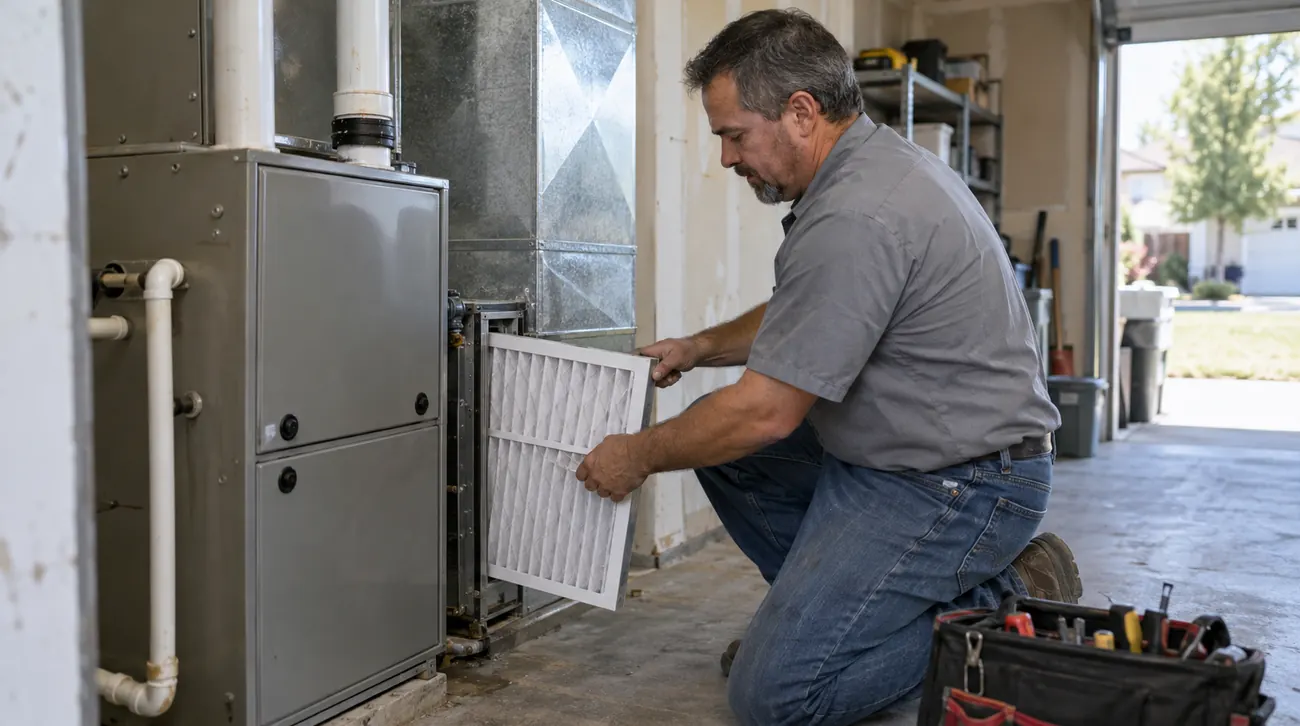
A pre-season heating visit takes most of this off the table. A thorough pre-season furnace maintenance visit covers the steps that matter:
- Inspecting the heat exchanger for cracks, scale, or corrosion.
- Cleaning the burner assembly and checking flame characteristics.
- Verifying flue draft and checking the vent for blockages, including bird nests.
- Testing safety controls such as the limit switch and flame sensor.
- Checking blower amp draw and replacing the filter.
Running the system for a short cycle in early fall, before you actually need it, is also worth doing. Better to find a problem on a mild day than on the first genuinely cold night. ENERGY STAR's furnace resources (opens in a new tab) are useful background if your equipment is nearing the end of its life.
Safety Steps Worth Taking Now
- Test every carbon monoxide alarm and replace the batteries. If you do not have one on each level, add them.
- Replace the furnace filter before the first heating cycle.
- Clear the area around the furnace. Stored boxes, paint, and solvents near a gas appliance are a fire hazard and a source of strange smells.
- Check that supply registers are open and that returns are not blocked by furniture.
- If anyone in the home has a respiratory condition, the EPA's indoor air quality resources (opens in a new tab) are worth reading before the heating season.
When to Call a Professional
Call for furnace repair when the smell is electrical or chemical, when it does not fade after a few cycles, when you see soot around the furnace or registers, when the furnace shuts off on its own repeatedly, or when a CO alarm has ever sounded.
If you smell gas, do not call from inside the house. Get out first, then call your gas utility.
Frequently Asked Questions
How long should a furnace burning smell last?
A dust burn-off usually fades within a single cycle and disappears within a few. If you are still smelling it a day later, something other than dust is burning.
Is it safe to sleep with the furnace running after a burning smell?
If it smelled like hot dust and faded, yes. If it smelled like plastic, smoke, or chemicals, shut the system off and use another heat source until a technician inspects it.
Can a dirty filter cause a furnace burning smell?
It can. A restricted filter lets the heat exchanger run hotter than designed, which scorches dust and can trip the limit switch. It also shortens heat exchanger life.
Do I need a tune-up every year in a mild climate?
Heating seasons are short in St. George, but the dust load is heavy and gas appliances still need combustion and safety checks. Annual service is the usual recommendation from heating services professionals.
Book Your Pre-Season Heating Visit
If your first heating cycle brought a furnace burning smell you are not sure about, call West Desert Plumbing, Heating & Air to schedule a heating inspection in St. George. A technician can check the heat exchanger, verify draft, and tell you whether what you smelled was ordinary dust or something that needs attention.
Before a service visit
Four details that improve the diagnosis.
- What the smell resembles
- Whether it fades during the cycle
- Soot around the furnace or registers
- Carbon monoxide alarm status
Sources and review
Authoritative references.
This resource was updated on . The references below support the safety and maintenance framework used on this page.
- Carbon monoxide safety fact sheet (opens in a new tab)U.S. Consumer Product Safety Commission
- Heating and cooling maintenance checklist (opens in a new tab)ENERGY STAR
- Care for Your Air guide (opens in a new tab)U.S. Environmental Protection Agency