Quick answer
What matters most.
Check that the thermostat is set to heat above room temperature, the furnace has power, and the filter is not badly clogged. If that does not restore heat, call a technician, and do not open furnace panels or try to relight gas parts.
Homeowner guide
The full guide.
A furnace that stops heating tends to do it at an inconvenient time. One moment the house is comfortable, and the next the vents are blowing cool air or the system will not start at all.
This guide to furnace repair in St. George, Utah explains why a furnace shuts down, what you can safely check and what happens during a repair visit. It reflects the work of West Desert Plumbing, Heating & Air, a local team that serves St. George, Santa Clara, Ivins, Washington and nearby communities.
What to do first when the heat stops
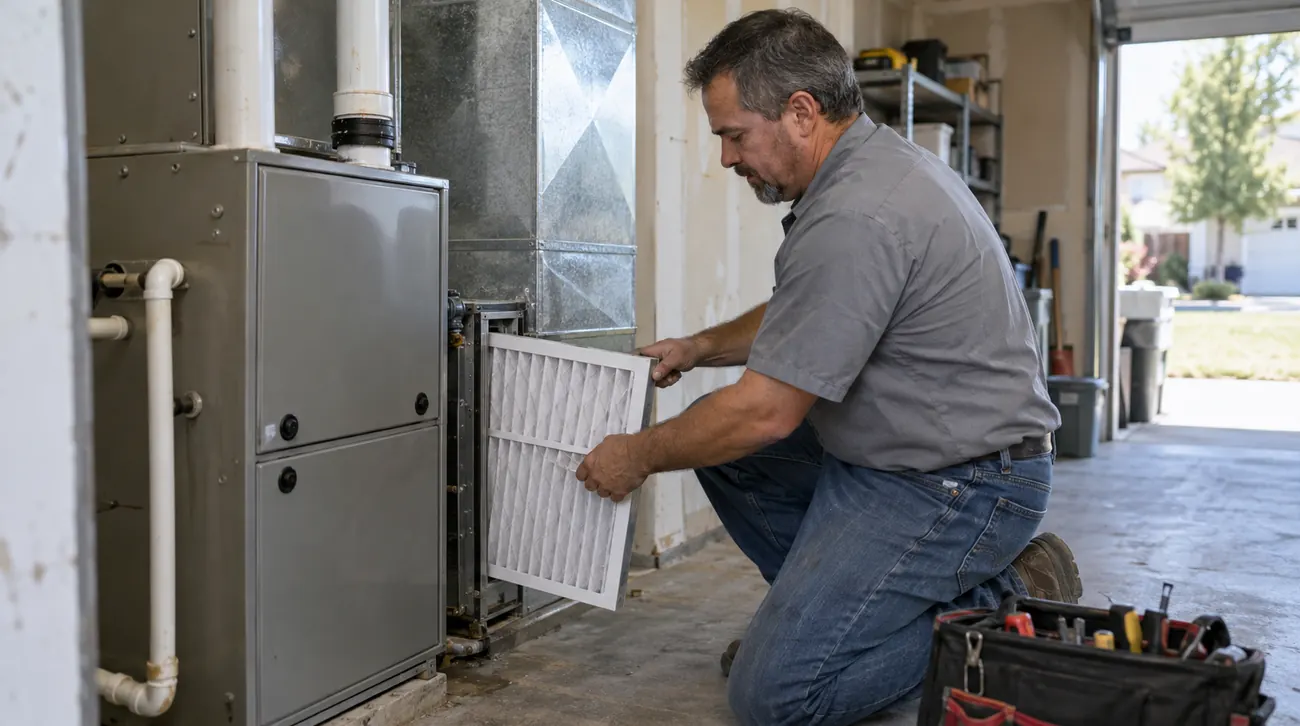
Start with the simple checks. Make sure the thermostat is set to heat and is above the room temperature, and check that the batteries are working if it uses them. Confirm that the furnace has power and that the filter is not badly clogged.
If any of this does not solve it, stop and call a professional. Do not open the furnace panels, and do not try to relight a pilot or reset gas parts. If you smell gas, leave the home right away and call your gas utility or emergency services from outside, away from any switches or flames.
Why furnaces cut out
A furnace has to complete a sequence of steps in order. The thermostat calls for heat, the controls start a blower and an igniter, gas flows, the burner lights and the blower moves warm air through the ducts. A safety system checks each step, and if one fails, the furnace shuts down.
A common cause is a flame sensor coated with a thin film of residue, which makes it fail to detect the flame, so the control shuts off the gas for safety. Another is a clogged filter that restricts airflow, so the heat exchanger overheats and a limit switch trips. A technician finds the point where the sequence stops, which is why describing what the furnace did, and when it stopped, makes the diagnosis faster and more accurate.
Without heat right now? Call West Desert Plumbing, Heating & Air at (435) 632-2547.
Signs a furnace needs repair
Watch for a furnace that will not start or stay running, rooms that heat unevenly and airflow that feels weak. A system that cycles more often than normal, or one that makes new noises or odors, also deserves attention.
None of these proves a specific failure, since several causes can look alike, and a symptom that seems minor may be the first sign of a part that is wearing out. They are reasons to schedule a diagnosis before the problem gets in the way of a comfortable evening at home. If there is smoke or a burning smell, turn the system off and call for help.
What happens at a furnace repair visit
The technician starts by asking what the furnace did and when. They check the thermostat call, the ignition sequence, the blower and the controls, and look at the filter and airflow. Safety controls are reviewed before the system returns to normal use.
Once the failed part is identified, the technician explains the repair and what it involves. Ask to see the failed part, and ask what to watch for afterward, such as a repeat shutdown or a change in the sound of the blower, so that you can report it quickly if it returns. If the furnace is old or has failed repeatedly, you can ask about replacement options as well.
Picture a homeowner in St. George with a furnace that quit
Picture a homeowner in St. George who wakes up to a cold house. The thermostat is set to heat, but the furnace starts up, runs briefly and shuts down again.
The homeowner calls a technician, who finds a dirty flame sensor and a dirty filter. Both are cleaned or replaced, and the technician checks the rest of the sequence. The heat comes back, and the homeowner learned how a small part can shut down the whole system.
Keeping the furnace running
A furnace that is maintained is less likely to fail unexpectedly. Change the filter on a regular schedule, keep vents and returns clear, and keep stored items away from the furnace. A yearly tune-up lets a technician clean parts and test safety controls, and it gives you a chance to ask questions about the age and condition of the furnace before a problem forces the decision.
Ask the technician what schedule fits your system. Consider a carbon monoxide alarm near sleeping areas, and test it regularly, since furnaces burn fuel. The EPA indoor air quality page has general information on household air safety.
Call about furnace repair in St. George, Utah
West Desert Plumbing, Heating & Air lists furnace repair, furnace maintenance and heating services. The ENERGY STAR furnace page covers replacement equipment in general terms.
A furnace problem is easier to handle with a clear diagnosis. A technician can trace the cause and explain the repair options.
For furnace repair in St. George, Utah, call West Desert Plumbing, Heating & Air at (435) 632-2547.
Before a service visit
Four details that improve the diagnosis.
- What the furnace did before it stopped
- Whether it starts, runs briefly, and shuts down
- Thermostat setting and filter condition
- Any new noises, odors, or uneven heating
Sources and review
Authoritative references.
This resource was updated on . The references below support the safety and maintenance framework used on this page.
- Indoor air quality (opens in a new tab)U.S. Environmental Protection Agency
- Furnaces (opens in a new tab)ENERGY STAR